

Last Updated: June 2026
| Quick Answer:
Switching print and mail vendors for regulated industries involves four phases: vendor evaluation and selection, contract and data security review, onboarding and file workflow setup, and a parallel test run before full production handoff. When a new vendor has a structured onboarding process and a real-time tracking portal, the transition typically completes within a few business days for initial setup and within one to two production cycles for full operational confidence. The transition risk is almost always lower than the ongoing risk of staying with a vendor that cannot document its compliance controls. |
Introduction
Switching print and mail vendors for regulated industries is one of the most avoided decisions in procurement, not because it is actually dangerous, but because it feels dangerous. The fear of a production gap, a data migration problem, or a missed regulatory deadline is enough to keep many procurement directors locked in vendor relationships that stopped working years ago.
That fear is understandable. Regulated mail is not a commodity. A missed RESPA (Real Estate Settlement Procedures Act) disclosure, an undeliverable debt-collection notice, or a billing statement that never reaches the right address can trigger complaints, audits, and financial exposure. The stakes are real.
But the calculus on switching vendors is often backwards. Most procurement directors overestimate the risk of the transition and underestimate the ongoing cost of staying with a vendor that cannot prove accuracy, cannot show real-time job status, and cannot produce audit documentation on demand. This post walks through what a vendor transition in a regulated industry actually looks like, step by step, so the path forward is clear.
Key Takeaways
- Vendor onboarding for regulated-industry mailers typically completes in days, not weeks, when a structured process is in place.
- The biggest transition risk is not the switch itself. It is choosing a vendor without documented compliance controls and discovering the gap during an audit.
- A parallel test run before full production handoff eliminates most transition risk.
- SOC-audited vendors with client-facing tracking portals give procurement teams the documentation and visibility they need from day one.
- Asking the right questions before signing a contract separates a compliant partner from a commodity printer.
Why Do Procurement Directors Stay in Underperforming Vendor Relationships Longer Than They Should?
Underperforming vendor relationships persist for one reason: the known cost feels lower than the unknown risk. A vendor that misses SLA windows, provides little tracking data, and responds slowly to issues is a frustration, not an immediate crisis. Switching feels like trading a frustration for a potential crisis, and most people avoid potential crises.
There is also organizational inertia. The original decision to use the current vendor involved time, evaluation, contracts, and internal sign-off. Admitting the relationship is not working can feel like admitting the original decision was wrong. That perception slows action even when the evidence for change is clear.
The actual cost of staying is higher than most buyers calculate. A vendor that cannot produce SOC audit documentation exposes the organization to compliance risk. A vendor that can’t show real-time tracking creates a visibility gap that shows up in audits. A vendor that communicates poorly about job status forces internal teams to chase information instead of managing operations. Those are not minor inconveniences. They are ongoing liabilities.

Staying with an underperforming vendor is not a safe choice. It is a deferred liability that accumulates silently until an audit or dispute makes it visible.
The fear of switching is legitimate. But it is worth comparing that fear against the documented cost of the current vendor’s gaps.
How Do High-Volume Mailers Handle Switching Print and Mail Vendors for Regulated Industries Without Disrupting Production?
Most people imagine a vendor switch as a dramatic cutover: one day the old vendor is running jobs, the next day the new vendor is, with nothing in between except the possibility of something going wrong. That is not how a well-managed transition works.
A structured print and mail vendor transition has four phases. Each phase is manageable when the new vendor has a defined onboarding process.
Phase 1: Vendor Evaluation and Selection
Before any transition begins, the new vendor must be qualified. For regulated industries, that means verifying SOC audit credentials (SSAE 18 SOC 1, Type II, SOC 2, Type II, SOC 3), confirming data security protocols, reviewing the onboarding timeline, and understanding how the vendor tracks jobs and handles exceptions.
This phase should also include a demo of the vendor’s client-facing portal, if one exists. A vendor that gives buyers real-time job visibility from upload to delivery confirmation is a structurally different partner than one that sends status emails on request.
Phase 2: Contract and Data Security Review
Data security review is where regulated-industry buyers spend the most time, and rightly so. The new vendor needs to demonstrate that file transfer is encrypted, that access is controlled with two-factor authentication, and that their internal handling of sensitive data meets regulatory standards.
Contracts should specify SLAs, turnaround windows, escalation paths, and the vendor’s obligation to maintain SOC certifications. These are not negotiating points. They are table stakes for a vendor serving regulated industries.
Phase 3: Onboarding and File Workflow Setup
Onboarding in a structured environment is faster than most buyers expect. A vendor with a defined process guides the client through file upload specifications, template setup, address hygiene configuration, proof approval workflows, and job status notification settings.
VariVerge, for example, assigns an in-house support team to new client setup. That team provides portal walkthroughs, data upload assistance, and access to video tutorials and training materials. Initial setup is typically completed within a few business days. The client does not need to figure out the system alone.
Phase 4: Parallel Test Run Before Full Production Handoff
The single most effective risk mitigation strategy in a vendor transition is running a test job in parallel before cutting over fully. This means giving the new vendor a real production file, running the job, reviewing the output against the vendor’s tracking data, and confirming that every piece meets the required standard.
A parallel run catches edge cases in file formatting, address hygiene, or approval workflows before those edge cases touch live regulatory mail.
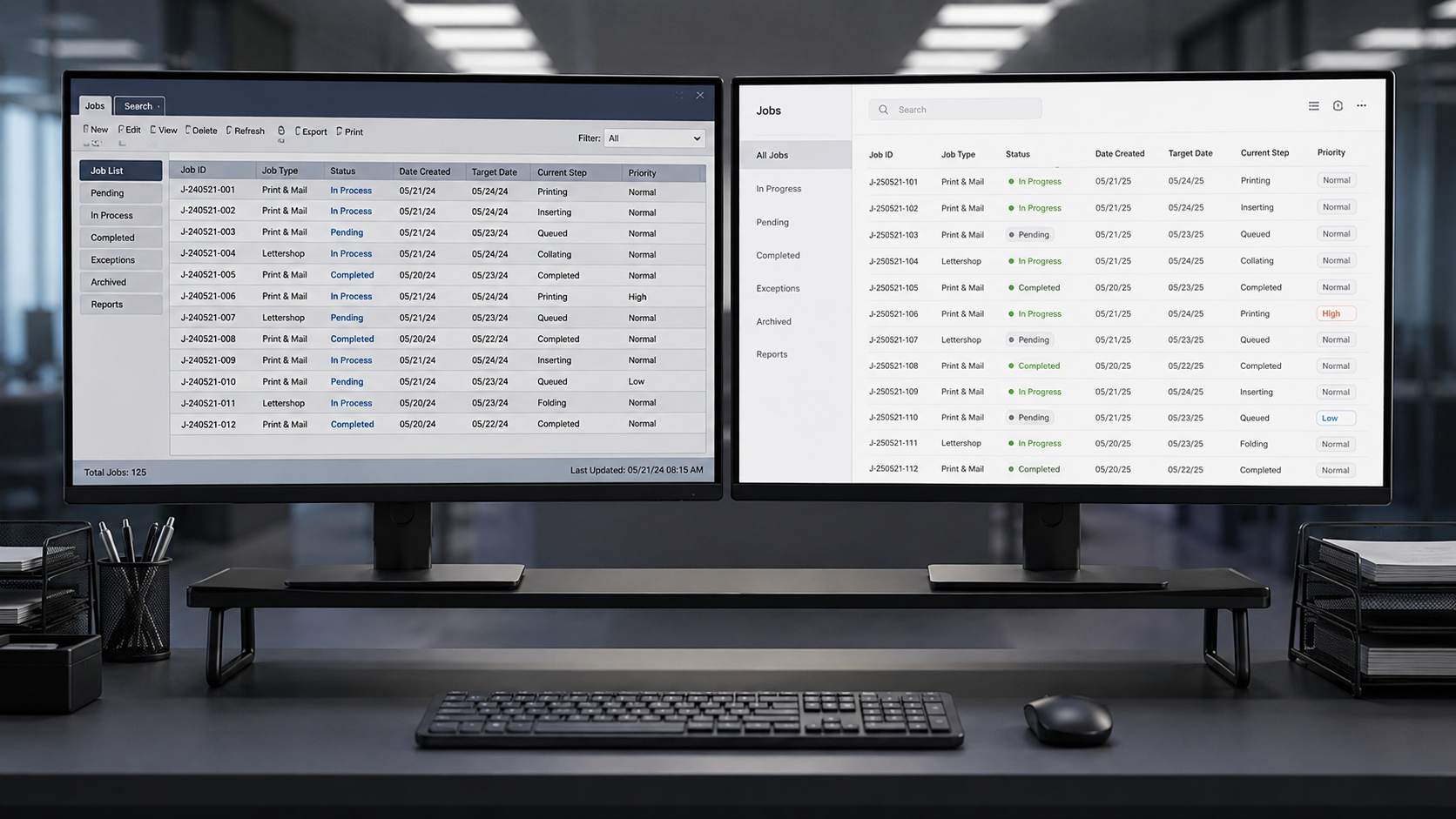
A parallel test run before full production handoff catches file and workflow issues before they reach live regulatory mail, it is the step that makes vendor transitions manageable.
It also gives the buyer’s internal team direct experience with the new vendor’s portal and communication process under low-stakes conditions.
How Do High-Volume Regulated Mailers Switch Print and Mail Vendors Without Disrupting Production?
High-volume regulated mailers switch print and mail vendors without disrupting production by using a phased transition approach with a parallel test run, a defined onboarding timeline, and a client-facing tracking portal that gives full job visibility from the moment files are uploaded.
The key is sequencing. No legitimate compliance-grade vendor asks a regulated mailer to simply hand over production without a structured handoff period. The phases described above are specifically designed to keep production continuous while the new relationship is being established.
Three factors determine whether a vendor switch goes smoothly or causes disruption: whether the new vendor has a documented onboarding process, whether the buyer runs a parallel test job before full handoff, and whether the new vendor provides real-time job visibility so the buyer can confirm status at any point during the transition.
Buyers who skip the parallel test run are the ones who have disruption stories. Buyers who follow a phased process with a vendor that has handled regulated-industry transitions before rarely do.
What Does VariVerge’s Onboarding Process Look Like from First Contact to First Job?
VariVerge has spent over 30 years building onboarding infrastructure for regulated-industry clients in mortgage servicing, credit and collections, and private energy. The process is documented, staffed, and designed to get a new client running cleanly in the shortest time possible.
Step 1: Discovery and Qualification
The process starts with a demo. McKenzie Parker, Director of Sales, walks prospective clients through VariVerge’s compliance credentials (SSAE 18 SOC 1, Type II, SOC 2, Type II, SOC 3), the VariTrack portal, file-based inserting with 2D barcode verification, and address hygiene services including NCOA, ACS, and Nixie reporting.
This is where the buyer asks the hard questions: about security protocols, about what happens when a piece is flagged as undeliverable, about how VariVerge handles audits, and about escalation paths when something needs immediate attention. Those conversations happen before any contract is signed.
Step 2: Onboarding and Portal Setup
Once a client is on board, VariVerge’s in-house support team handles the setup directly. That includes customizing the VariTrack portal to the client’s workflow, guiding the team through file upload specifications, configuring proof approval processes, and setting up job status notifications.
VariTrack supports multiple users with customizable access permissions. A compliance officer can have a different view than a production coordinator. Administrative roles can be assigned. The setup is tailored to the client’s internal structure, not a generic configuration.
Step 3: Data Upload Assistance and First Job Review
VariVerge’s support team stands alongside the client during the first file upload. If the file has formatting issues or address data anomalies, those are caught before the job enters production. This is where the 2D barcode verification system does its first round of work: every piece is matched to its data record before a single envelope is sealed.
Step 4: First Production Run with Full VariTrack Visibility
The client monitors the first production run in real time through VariTrack. Job status updates, address correction outcomes, delivery tracking through USPS Intelligent Mail Barcode (IMB), and Nixie reports for undeliverable pieces are all visible in the portal from the moment the job starts.
There is no waiting for a status email. There is no calling the vendor to find out where things stand. The client has full operational visibility, which is the same visibility they will have on every job going forward.
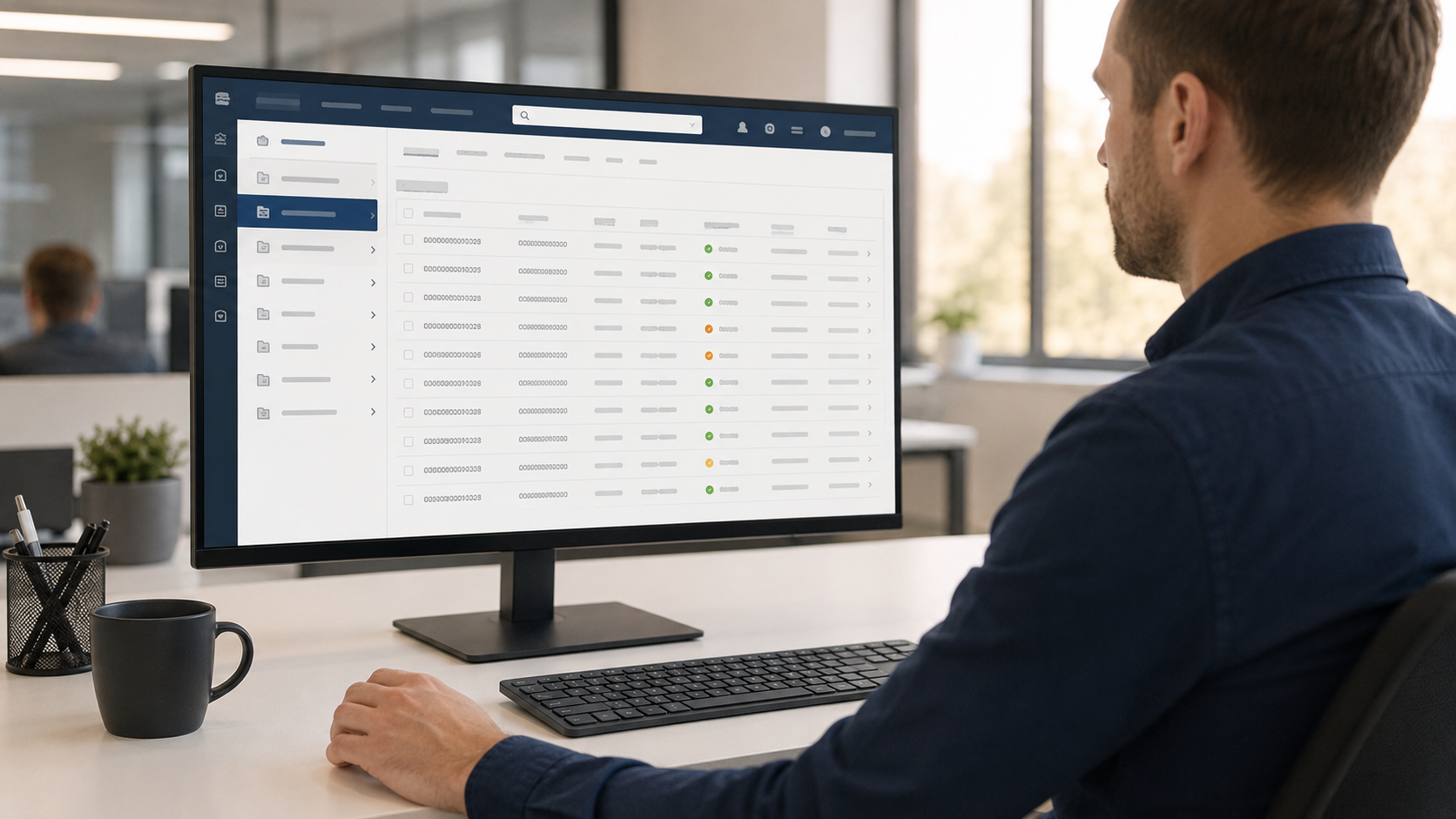
Real-time job visibility means a compliance team can confirm delivery status, address correction outcomes, and production records at any point — without waiting for a vendor to send a report.
What Questions Should You Ask Any Vendor Before Committing to the Switch?
The difference between a compliance-grade mailing partner and a commodity print vendor is visible in the answers to five questions. Ask these before signing anything.
- Can you provide current SOC audit documentation? Specifically, SSAE 18 SOC 1, Type II, SOC 2, Type II, and SOC 3?
A compliant vendor answers this immediately and produces the documentation without hesitation. A vendor that hedges, references pending certifications, or offers alternatives is not the right partner for regulated mail.

SOC audit credentials are not a checkbox. They are independently verified documentation that a vendor’s data security and processing controls have been audited and confirmed by a third party.
- Do you have a client-facing portal where I can monitor job status in real time?
Real-time visibility is not a luxury for regulated mailers. It is the difference between knowing a job is on track and finding out it was not during an audit.
- What is your file-based inserting process, and how do you verify piece integrity?
File-based inserting with 2D barcode verification is the production standard that makes errors mechanically impossible in compliant operations. A vendor that cannot describe this process in detail is running a different kind of operation.
- What address hygiene services are included, and how do you report on undeliverable mail?
NCOA updates, ACS reporting, and Nixie reporting are the standard tools for managing address data in high-volume regulated environments. A vendor that does not include these is handing the buyer an invisible risk.
- What does your onboarding timeline look like, and who manages the process on your side?
A vendor with a documented onboarding process managed by a dedicated internal team is a vendor that has done this before. Vague answers about timelines are a signal.
Below is a summary comparison between what a compliant vendor provides and what a commodity vendor typically offers.
| Evaluation Criteria | Compliant Vendor | Commodity Vendor |
| SOC audit (SSAE 18 SOC 1, Type II, SOC 2, Type II, SOC 3) | Yes, audited regularly | Rarely or never |
| Real-time job tracking portal | Yes, client-facing | Email updates only |
| File-based inserting with 2D barcode verification | Standard process | Manual spot checks |
| Address hygiene (NCOA, ACS, Nixie reporting) | Integrated, automated | Optional add-on |
| Defined onboarding timeline (days, not weeks) | Documented SLA | No stated timeline |
| Direct access to leadership for escalation | Available | Help desk ticketing |
What Is the Real Cost of Staying with an Underperforming Vendor?
Staying with the wrong vendor is not a safe choice. It is a deferred liability. In regulated industries, the cost of vendor underperformance shows up in specific, measurable ways.
Compliance exposure accumulates when a vendor cannot produce audit documentation. If a servicer is audited and the print vendor cannot provide dated delivery records for every required disclosure, the servicer carries that burden, not the vendor.
Undeliverable mail in collections is a legal and operational problem. When debtors move frequently, and address hygiene is not active, notices go to wrong addresses. Those notices are often central to proving that required contact was made. Without delivery records, that proof is gone.
In private energy, billing disputes and PUC (Public Utilities Commission) complaints often hinge on whether the customer received accurate notice. A vendor that cannot show delivery confirmation for a rate change notice leaves the utility carrying a dispute it cannot defend.
The cost of a vendor transition is measured in days. The cost of staying with the wrong vendor is measured in audit findings, consumer complaints, and regulatory exposure. Those two numbers are rarely close.
Final Thoughts
Switching print and mail vendors for regulated industries is a manageable process. The fear around it is real, but it is based on a worst-case scenario that a structured transition specifically prevents.
The procurement directors and compliance officers who have been through this process with a vendor like VariVerge often say the same thing: the transition was faster and smoother than expected, and the real regret was waiting so long to make the move.
If your current vendor cannot show you SOC audit documentation, cannot give you real-time job status, and cannot tell you what happens to your mail after it leaves the facility, those are not minor gaps. They are the kind of gaps that appear in audit findings.
VariVerge is a SOC-audited variable data printing and mailing partner with over 30 years of experience serving mortgage servicers, credit and collections agencies, and private energy companies. The VariTrack portal gives clients real-time visibility from file upload to delivery confirmation, and every job runs through file-based inserting with 2D barcode verification so piece integrity is documented, not assumed.
Ready to see what a vendor transition actually looks like, and how quickly your operation can be up and running? Book a demo with McKenzie Parker, Director of Sales, and walk through the onboarding process step by step.
Schedule your demo here: https://meetings-na2.hubspot.com/mckenziep60
Author Bio
This post was produced by the VariVerge content team in partnership with Luce Media. VariVerge has served regulated-industry mailers since 1992, with compliance credentials including SSAE 18 SOC 1, Type II, SOC 2, Type II, and SOC 3. For questions about VariVerge’s services or onboarding process, contact McKenzie Parker, Director of Sales.
Frequently Asked Questions
How long does it take to switch print and mail vendors in a regulated industry?
Initial vendor onboarding typically completes within a few business days when the new vendor has a structured setup process and a client-facing portal. Full operational confidence, including a successful parallel test run and first production job, usually takes one to two production cycles. The timeline depends on the complexity of the client’s file workflows and volume requirements.
What compliance certifications should a regulated-industry print vendor hold?
Regulated-industry print vendors should hold SSAE 18 SOC 1, Type II, SOC 2, Type II, and SOC 3 certifications, which confirm that the vendor’s controls for data security, availability, processing integrity, confidentiality, and privacy have been independently audited. Vendors serving mortgage servicers should also understand RESPA compliance requirements. Vendors serving collections agencies should be aligned with FDCPA documentation standards.
What is a parallel test run in a vendor transition, and why does it matter?
A parallel test run involves giving the new vendor a real production file before full handoff, running the job, and reviewing the output against the vendor’s tracking and verification data. It matters because it catches file formatting issues, address hygiene anomalies, and workflow gaps before those issues affect live regulatory mail. It is the single most effective way to eliminate transition risk.
How does VariTrack help during a vendor transition?
VariTrack gives clients real-time visibility into every stage of their first job, from file upload through production and delivery. During a transition, that visibility means the buyer can confirm that every piece has been processed correctly, that address hygiene tools have run, and that delivery is confirmed through USPS Intelligent Mail Barcode tracking, all from a single dashboard. There is no need to call the vendor to find out where things stand.
What should I ask a print vendor before switching to them?
Ask for current SOC audit documentation (SSAE 18 SOC 1, Type II, SOC 2, Type II, SOC 3). Ask whether they offer a client-facing real-time tracking portal. Ask about their file-based inserting process and how they verify piece integrity. Ask what address hygiene services are included and how they report on undeliverable mail. Ask for a documented onboarding timeline with a named internal contact managing the process.
Can VariVerge handle high-volume regulated mail during the transition period?
Yes. VariVerge operates dual production facilities in Dallas and Amarillo, providing redundancy and the capacity to handle high-volume regulated mail without production gaps. The onboarding process is designed to run alongside existing vendor relationships, allowing clients to complete a parallel test run before fully transitioning production.