

Last Updated: June 2026
| Quick Answer:
Undeliverable mail costs high-volume mailers far more than the postage on a returned piece. For every mail piece that comes back, an organization has already paid for design, data processing, print production, postage, and the staff time required to manage the return. When address data decays go uncorrected across tens of thousands of pieces per month, those costs compound into a measurable annual budget drain. Pre-production address hygiene, including NCOA processing, Nixie reporting, and ACS feedback, is the most direct way to reduce return mail and recover those costs before the job runs. |
Introduction: The Waste Hidden in Plain Sight
Most high-volume mailers have accepted a certain return rate as background noise. A few percent here, a few hundred pieces there. It is built into the budget. The assumption is that some mail will always come back, and the only practical response is to manage the returns after the fact.
That assumption is costing more than most procurement teams realize. Undeliverable mail is not just a postage loss. It is a full-production loss, and in regulated industries like mortgage servicing, credit and collections, and private energy, it carries a second cost: the consumer who never received the communication you were legally required to send.
This post puts a specific shape on the problem. It explains how fast address data decays, what a realistic undeliverable rate actually costs across a year of production, and what a pre-production address hygiene workflow does to stop the loss before it starts.
Key Takeaways
- Address data decays at an estimated rate of 9 to 11 percent per year in the United States, driven by residential moves and address changes.
- Undeliverable mail cost includes postage, print, processing, and staff time, not just the returned envelope.
- For regulated mailers, a piece that never arrived is also a compliance exposure, not just an operational loss.
- NCOA address correction and ACS feedback, when applied before production, reduce return rates and give mailers cleaner data for future jobs.
- Nixie reporting captures undeliverable mail.
- Procurement directors who quantify their annual undeliverable mail cost consistently find it’s higher than the cost of a correction workflow to prevent it.
How Fast Does Address Data Actually Decay?
The United States Postal Service processes approximately 35 to 40 million change-of-address requests each year. That figure represents only the households that formally notify the post office. A larger population simply moves without filing a change-of-address form, meaning the data your mailing list holds is wrong from the moment the person leaves.
The USPS estimates that roughly 1 in 9 Americans moves in a given year. For an organization holding a 50,000-record mailing list that is not regularly cleaned, that number translates to approximately 5,500 records that could be stale at any point in the year, and that is before accounting for the records that were already outdated when the list was first built.
Address data does not go bad all at once. It erodes gradually, with older records drifting further from accuracy with each passing month. A list that was clean 18 months ago has had more than a full year of residential movement working against it.
Collections operations face an additional dimension of this problem. Consumers in collections move more frequently than the general population, often without forwarding notices. The result is that a mailing list in a collections workflow can decay faster than a standard residential list, which pushes the return rate higher and the reach of each notice lower.
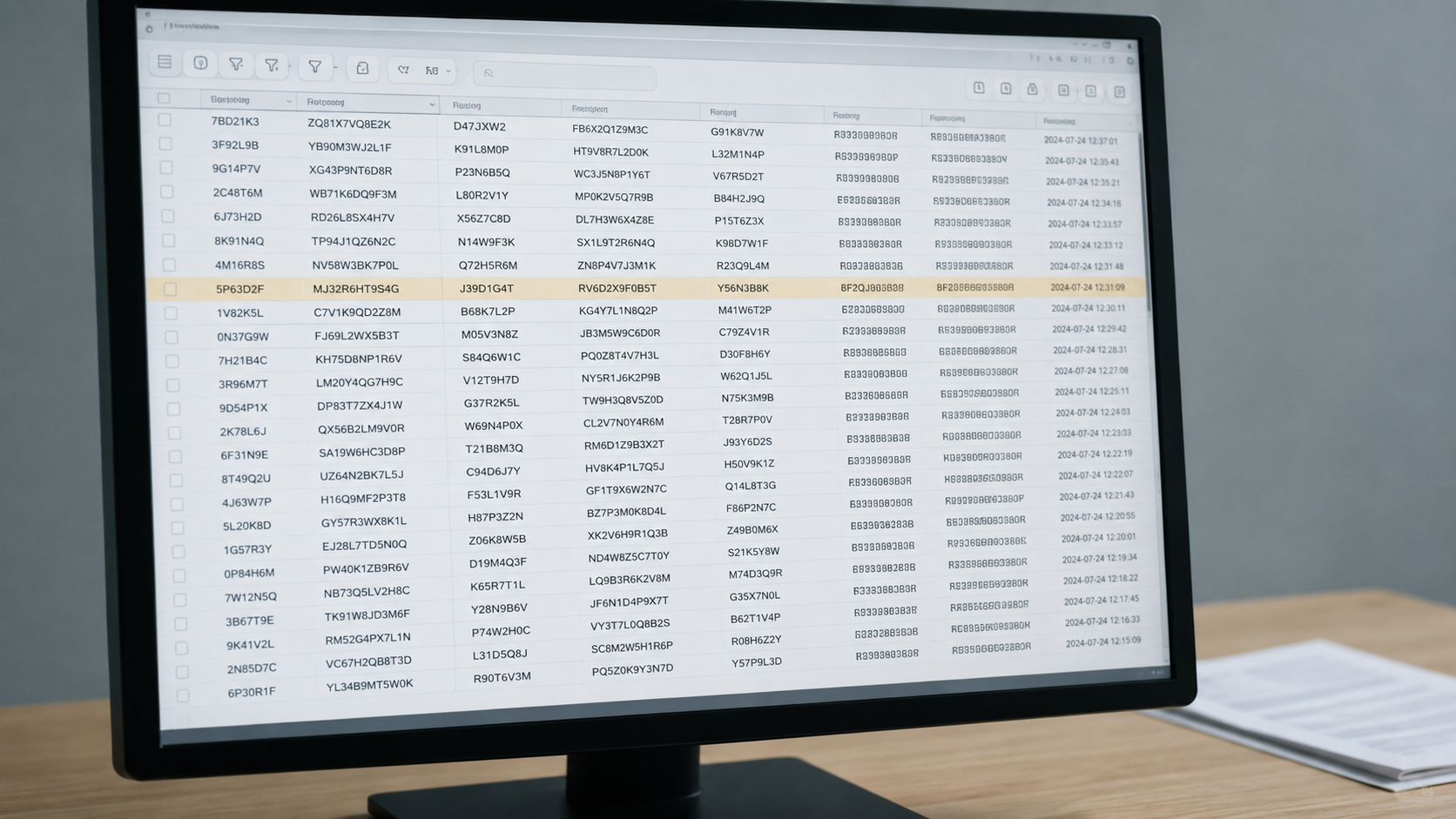
A mailing list that was accurate 18 months ago has had more than a full year of residential movement working against it — silently increasing your return rate with every job that runs.
Estimated Address Data Decay by Mailer Type
| Mailer Type | Estimated Annual Decay Rate |
| General residential mailing | 9 to 11 percent |
| Mortgage servicing / escrow notices | 8 to 12 percent |
| Credit and collections | 12 to 18 percent |
| Private energy / utility billing | 7 to 10 percent |
Note: Decay rates are estimates based on USPS move volume data and industry research. Actual rates vary by list age, source quality, and industry segment.
What Does Undeliverable Mail Actually Cost Per Piece?
The conversation about undeliverable mail usually centers on the wasted stamp. That framing understates the loss by a wide margin.
By the time a piece comes back as undeliverable, the organization has already spent money on each of the following stages.
- Data processing: Preparing the file, running personalization, and formatting the job for production.
- Variable data print production: The paper, toner, and machine time to produce each piece.
- Inserting and finishing: Folding, inserting into an envelope, and sealing.
- Postage paid on outbound mail: First-class or presort postage paid at the point of mailing, not refunded on return.
- Incoming processing of returns: Staff time to open, sort, log, and dispose of returned mail.
- List update activity: Researching correct addresses, updating records, and preparing a re-mail if required.

By the time a piece comes back as undeliverable, the organization has already paid for data processing, print production, inserting, outbound postage, and the staff time to manage the return.
A reasonable all-in cost estimate for a standard first-class transactional piece, including all of the above, runs between $0.85 and $1.40 per piece depending on page count, postage class, and internal labor rates. A return rate of 3 percent on a 50,000-piece monthly run means approximately 1,500 pieces fail to deliver. At $1.10 per piece, that is $1,650 lost on a single job.
Annualized at that rate, the undeliverable mail cost for one mailing program reaches nearly $20,000 per year. For programs mailing at higher volumes or carrying higher return rates, the number scales proportionally.
Collections operations carry a second cost that general mailers do not. Under the Fair Debt Collection Practices Act (FDCPA), a notice that never reached the consumer is a notice that never legally served its purpose. When a consumer disputes that a notice was not received, an organization without delivery documentation cannot prove the piece was sent, addressed correctly, or mailed to the address on file. That creates a compliance exposure that no budget line can easily absorb.
How Do High-Volume Mailers Reduce Undeliverable Mail and Its Costs?
This is the question procurement directors and operations managers are searching for answers to, often after an internal audit surfaces a return rate that nobody had previously measured.
The answer is pre-production address hygiene, applied as a standard step in every job workflow rather than as an occasional cleanup project. The three components that make the most practical difference are NCOA processing, ACS feedback, and Nixie reporting.
NCOA Address Correction
The National Change of Address (NCOA) database maintained by the USPS contains change-of-address records filed within the last 48 months. Running a mailing list against NCOA before production identifies records where the consumer has filed a forwarding notice. The list gets updated with the new address before the job runs, which means the piece mails to a deliverable address from the start.
NCOA processing does not catch every bad address. It only catches consumers who filed with the post office. But it removes the most predictable and preventable category of return mail before a single sheet runs through the press.
ACS Feedback and Nixie Reporting
ACS (Address Change Service) provides electronic notification when mail is undeliverable or forwarded. Instead of receiving a physical return weeks after a job, the mailer receives a data file that documents what happened to each piece. This gives the operations team a structured record they can use to update their internal database before the next job runs.
Nixie reporting captures the returned physical mail and provides a documented log of undeliverable pieces. In a regulated environment, that documentation matters. It is the difference between saying a notice was returned undeliverable and being able to show exactly which pieces, to which addresses, on which dates.
Through VariTrack, VariVerge offers address correction and Mail Quality Reports as an add-on service, giving clients access to NCOA processing and ACS feedback that help improve mail quality, reduce undeliverable mail, and maintain a documented record of address updates. Nixie reporting is available to every client, and the results feed directly into VariTrack, the client-facing job visibility portal, so the operations team can see what happened and download clean data for their records without waiting for a vendor report.
What Does a Pre-Production Address Hygiene Workflow Look Like?
Most print vendors receive a file, run the job, and hand off to the carrier. What happens to the address data before production, and what feedback comes back after delivery, is rarely part of the standard workflow.
A pre-production address hygiene workflow runs in the opposite direction. The file is processed before anything prints.
- File submission: The client uploads the data file through a secure transfer portal.
- Pre-production data validation: The file is checked for formatting errors, duplicate records, and missing address fields.
- NCOA processing: The address list is run against the National Change of Address database and updated with any forwarding records found.
- Production run: The cleaned and validated file drives the print and insert job. Every piece carries a 2D barcode tied to its recipient record.
- IMB tracking: Intelligent Mail Barcode data provides scan events as pieces move through the postal network.
- ACS feedback: Electronic notifications of undeliverable and forwarded pieces are captured and delivered to the client as structured data.
- Nixie reporting: Returned physical pieces are logged and documented for compliance and record-update purposes.
The result is a job where address problems are identified before production, not after, and where the client receives structured feedback they can use to clean their list before the next run.
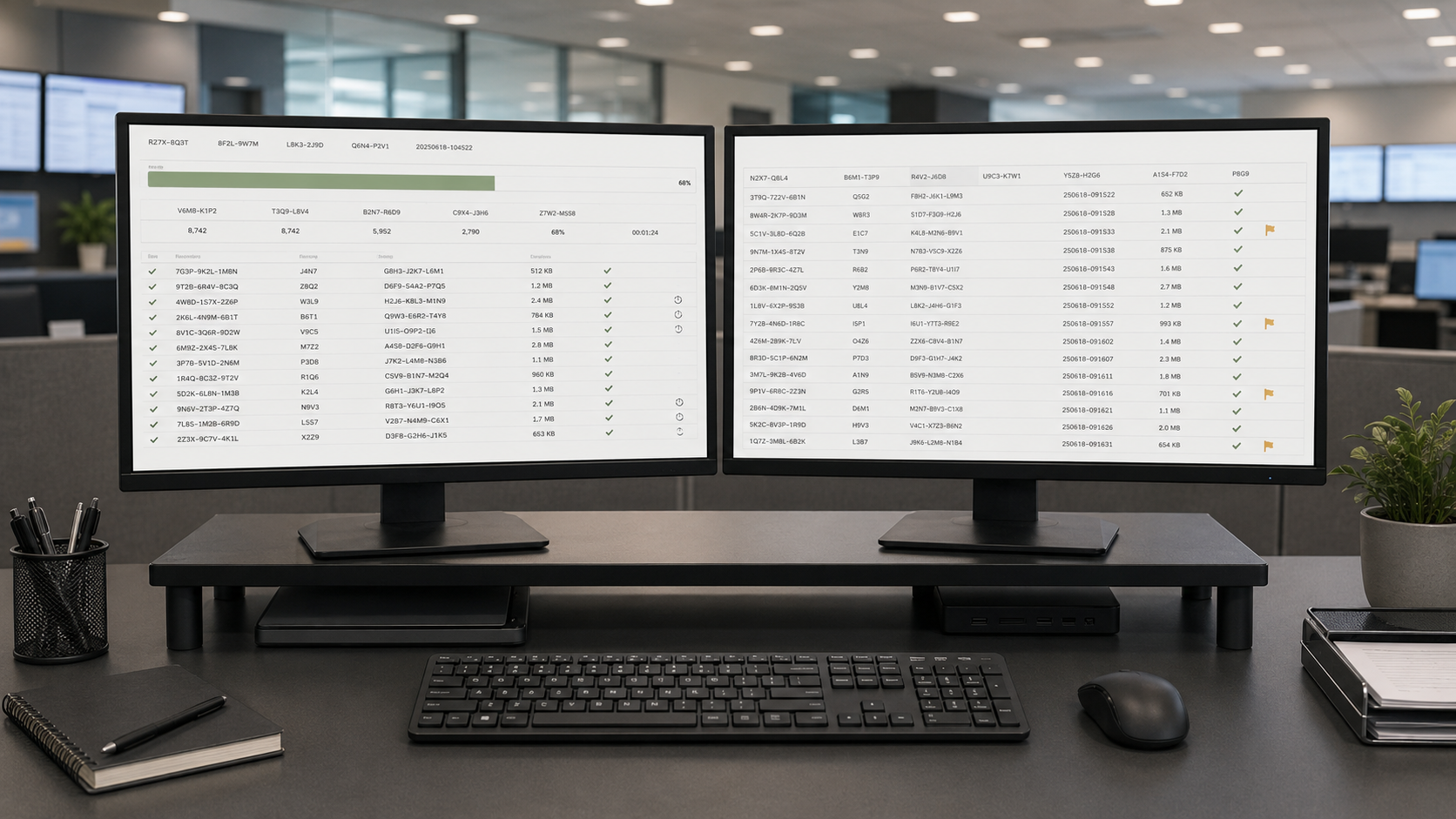
Pre-production address hygiene runs before anything prints — catching bad addresses in the data file, not in the return mail pile weeks later.
Timing matters here. Running NCOA after a job has already mailed catches nothing for that batch. It only improves the next one. Running it before production is the only point in the process where the correction changes the outcome.
How VariVerge Builds Address Correction into Every Job
VariVerge is an SSAE 18 SOC 1 Type II, SOC 2 Type II, and SOC 3 audited print-and-mail partner serving regulated industries. The same audited controls that govern data security in a mortgage servicing or collections workflow also support the integrity of the address management process.
Through VariTrack, clients can request address correction and Mail Quality Reports as an add-on service, including NCOA processing and ACS feedback. This gives clients access to documented address updates, helps identify opportunities to reduce return mail, and supports better mailing quality over time. Every returned piece represents a cost the client should not have to carry unnecessarily, which is why address quality reporting can be a valuable part of a regulated mail workflow.
VariTrack, the client-facing job visibility portal, puts the results of that process in the hands of the operations team directly. After a job completes, the client can log in and see job status, address correction results, Nixie data, and IMB tracking information without waiting for a vendor to assemble a report. The data is clean, structured, and downloadable, which means it can feed directly into the client’s internal records or CRM.
For collections and mortgage servicing clients, this is not just an efficiency tool. It is a documentation layer. When a consumer disputes receipt of a notice, or when a regulator asks for evidence that a required disclosure was mailed to a current address, the records in VariTrack provide that documentation in a form that holds up under review.
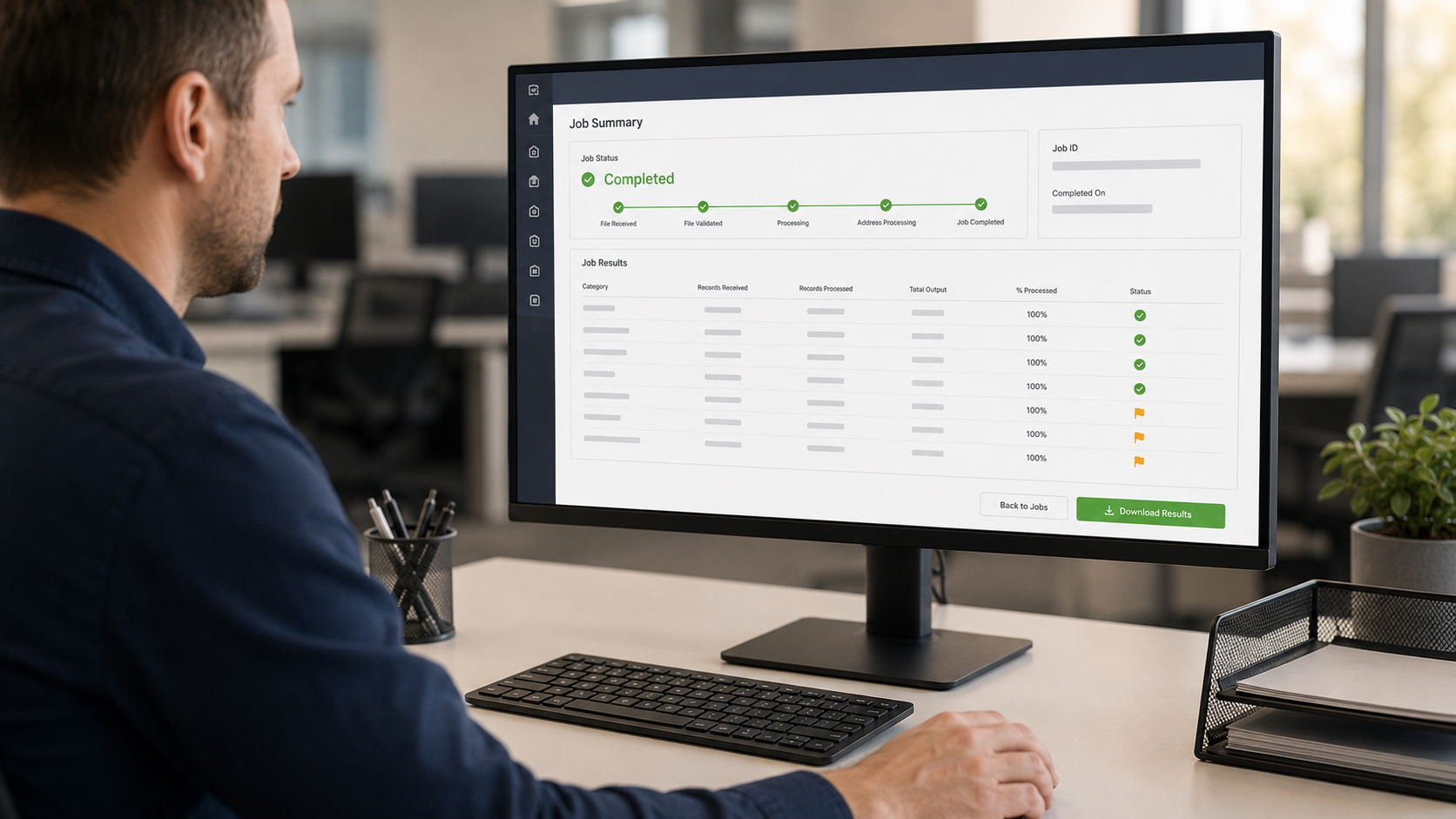
After every job, VariTrack puts Nixie data, address correction results, and IMB delivery tracking in the hands of the operations team — clean, structured, and downloadable without waiting for a vendor report.
Clients who move to VariVerge’s workflow from a vendor without address hygiene capabilities typically see their return rates drop in the first few jobs. The operational savings show up in postage costs, print waste, and staff time. The compliance benefit shows up in the audit record.
What Is the Cost of Getting This Wrong?
The direct cost of undeliverable mail is measurable and often surprises procurement teams when they calculate it for the first time. The compliance cost is harder to quantify but significantly larger in potential exposure.
For mortgage servicers, a notice that never reached the borrower can create grounds for a RESPA (Real Estate Settlement Procedures Act) complaint. A single complaint that advances to a CFPB inquiry generates far more in staff time, legal review, and management attention than any annual investment in address hygiene.
For collections operations, the FDCPA requires that notices reach consumers. A piece returned as undeliverable with no documentation of the address used, the date mailed, or the correction process applied leaves the collector with no paper trail if the account is disputed.
For private energy providers, a billing dispute that stems from a missed statement because the address was wrong can trigger a Public Utilities Commission (PUC) complaint. Those complaints carry their own investigation and response burden.
The common thread across all three industries is this: the cost of the compliance failure is always higher than the cost of the process that would have prevented it. An address hygiene workflow is not an added expense. It is insurance against a more expensive outcome.
Final Thoughts: Measure It Before You Accept It
Undeliverable mail costs for high-volume mailers are real, measurable, and in most cases larger than the teams managing those programs realize. The combination of postage loss, print waste, staff time, and compliance exposure adds up to a number that makes address hygiene look inexpensive by comparison.
The procurement director who knows their current return rate, and who has calculated what that rate costs across a year of production, has the information they need to make a straightforward business case for changing their workflow. The one who has not done that calculation is accepting a cost they cannot see.
VariVerge builds address correction and Nixie reporting into every job because that is how a compliance-grade mailing program operates. The result is a lower return rate, cleaner data for the next run, and documented records that stand up when an auditor or regulator asks the questions.
Ready to see how VariVerge’s address hygiene workflow reduces your return mail rate and the costs that come with it? Book a demo with McKenzie Parker, our Director of Sales:
https://meetings-na2.hubspot.com/mckenziep60
About the Author
This post was produced by the content team at Luce Media on behalf of VariVerge. VariVerge is an SSAE 18 SOC 1, Type II, SOC 2, Type II, and SOC 3 audited variable data printing and mailing partner serving regulated industries including mortgage servicing, credit and collections, and private energy. Content reflects VariVerge’s operational expertise and the experience of its leadership team, including owners Luke and James Austin.
Frequently Asked Questions
What does undeliverable mail cost per piece for a high-volume mailer?
The all-in cost per undeliverable piece for a high-volume mailer typically runs between $0.85 and $1.40, depending on page count, postage class, and internal labor rates. That figure includes data processing, print production, outbound postage, and the staff time required to manage the return. Postage paid on outbound first-class mail is not refunded when a piece comes back.
How fast does mailing address data decay?
Address data decays at an estimated rate of 9 to 11 percent per year for general residential mailers, based on USPS change-of-address volume. Collections mailers can see higher decay rates, ranging from 12 to 18 percent annually, because consumers in collections move more frequently and are less likely to file change-of-address forms. A list that was accurate 18 months ago has had significant residential movement working against it.
What is NCOA address correction and how does it reduce return mail?
NCOA, or National Change of Address, is a USPS database containing forwarding records filed within the last 48 months. Running a mailing list against NCOA before production identifies records where the recipient has filed a change-of-address notice. The address is updated before the job runs, which means the piece mails to a current, deliverable address from the start. It does not catch every bad address, but it eliminates the most predictable category of return mail before production begins.
What is Nixie reporting and why does it matter for compliance?
Nixie reporting is the process of capturing and documenting returned mail pieces. Instead of simply discarding returned envelopes, a Nixie reporting workflow creates a structured log of which pieces came back, to which addresses, and on which dates. For regulated mailers in mortgage, collections, and private energy, that documentation becomes part of the compliance record. When a consumer disputes receipt of a notice or a regulator requests evidence of mailing activity, Nixie data provides the documentation that a simple return-mail pile cannot.
How is VariVerge different from a standard print vendor when it comes to address hygiene?
Most print vendors receive a file, run the job, and hand off to the carrier. Address hygiene is not a standard part of that workflow. VariVerge builds NCOA address correction and ACS feedback into every job by default, before production runs. The results are visible through VariTrack, the client-facing job visibility portal, where clients can review address correction outcomes, download Nixie data, and monitor IMB delivery tracking. VariVerge holds SSAE 18 SOC 1, Type II, SOC 2, Type II, and SOC 3 certifications, and the same audited controls that govern data security apply to the address management process.
What is the difference between ACS feedback and Nixie reporting?
ACS (Address Change Service) is an electronic notification system that delivers structured data about undeliverable and forwarded pieces after a job mails. It is a data feed, not physical mail. Nixie reporting involves the physical returned pieces, logged and documented for the client. The two work together: ACS provides a fast, structured data record for list cleanup, while Nixie reporting provides the physical documentation trail that compliance and legal teams may need. For regulated industries, both are more useful than simply discarding returned mail.
Is address correction worth the cost for a high-volume mailing program?
For most high-volume mailers, yes. A return rate of 3 percent on 50,000 pieces per month translates to approximately 1,500 undeliverable pieces per job, and roughly 18,000 wasted pieces per year. At an all-in cost of $1.10 per piece, the annual waste cost approaches $20,000. Pre-production NCOA processing and ACS feedback reduce that rate before production begins. For regulated mailers, the compliance documentation that comes with a proper address hygiene workflow adds further value that does not show up in the postage savings line.